In cooling mode, capillary mats will generally be installed in ceilings or walls.

Capillary tube mats-types

Capillary tube mats-types

Polypropylene (PP) capillary tubes are 3.4×0.55 mm thick and 4.3×0.8 mm thick respectively. The two types of capillaries are generally used in all cases of heating, cooling and thermal tempering of concrete.

The usual capillary mats are of type G (straight), U (U-shaped) or Folimat type (encased in plastic backing film).

Due to the particularly small diameters and the small distance between the capillary tubes, the surfaces fitted with this system achieve homogeneous surface heating and cooling under the most ideal conditions: 60% radiation and 40% convection.

Due to the large radiating surfaces, very high thermal powers can be transferred at a minimum temperature difference between the return and the return (a few degrees Celsius).

In cooling mode, capillary mats will generally be installed in ceilings or walls. In the cooling mode, the average radiation temperature will be around 17ºC, with a temperature difference (dT) of 2 to 3K, lap between 15ºC-17ºC and return between 17ºC-19ºC. Depending on the type of ceiling structure, thermal cooling capacities of about 100W/mp (according to DIN EN 14240 at dT = 10 K) can be achieved.

Depending on the type of ceiling structure, thermal cooling capacities of about 100W/mp (according to DIN EN 14240 at dT = 10 K) can be achieved.

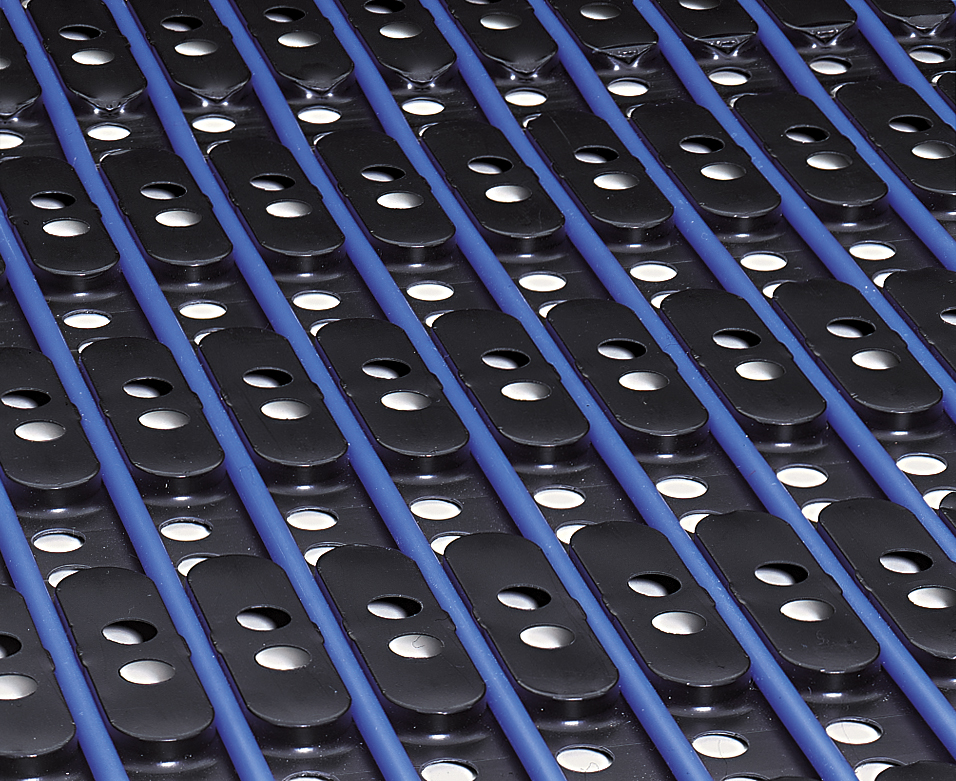
Folimat hair mat

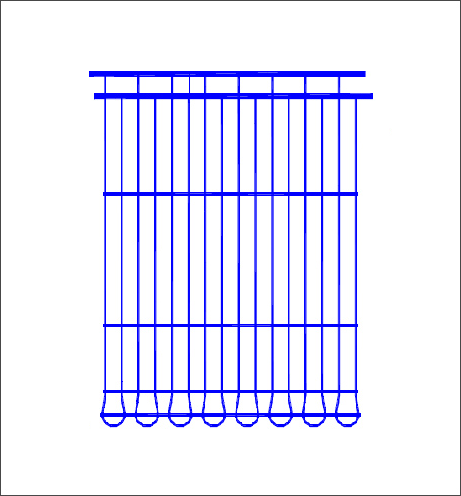
U-type capillary mat

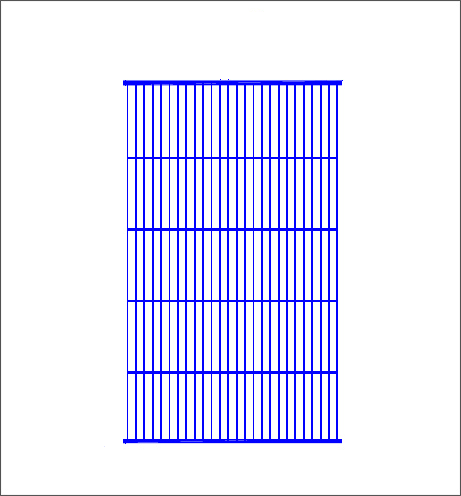
Hair mat type G

In order to avoid the occurrence of dew temperature phenomenon in ceilings, they will be provided with one or more dew sensors, which belong to the different ceiling adjustment zones. If a sensor registers the occurrence of dew point temperature, it sends a signal to the actuator of the respective hydraulic circuit and closes the hydraulic cooling circuit immediately, thus avoiding damage.

In practice, however, this physical phenomenon (the occurrence of dew temperature) occurs very rarely, because in intensively used buildings (office buildings, hospitals, etc.), radiation cooling is generally supplemented by a supplementary ventilation system to ensure the necessary air quality in the rooms, with automatic control of the indoor air humidity (the relative humidity in the rooms will be regulated to about 50%).

This site is registered on wpml.org as a development site.